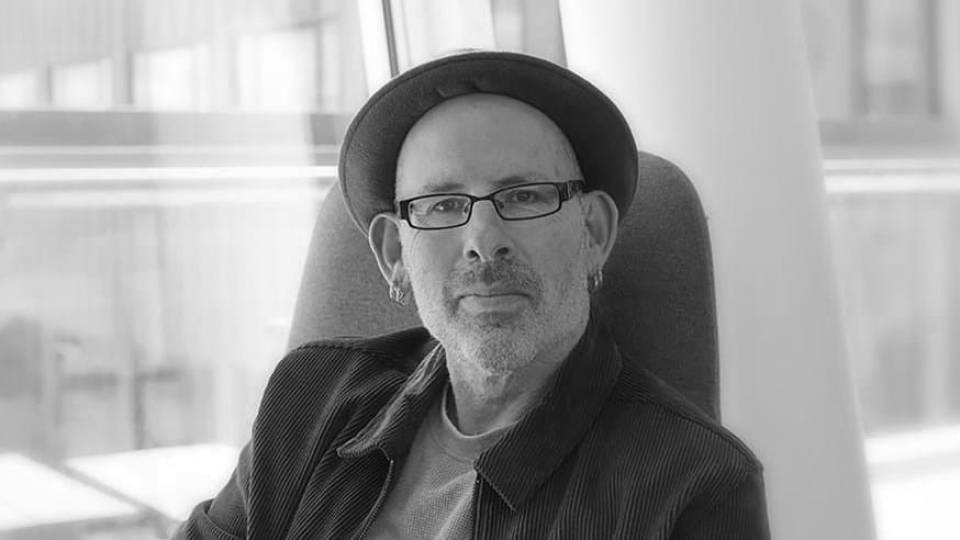
An In Good Company podcast with Professor Mark Levine, Professor of Social Psychology at Lancaster University and Director of the Lancaster Policing Academic Centre of Excellence.
The popular story of the 'bystander effect' suggests that the presence of other people makes us less likely to act. But that story is fake news. According to Professor Mark Levine, the evidence of how we help tells a very different story. In this episode of In Good Company, Mark explores why people often do step forward, what makes interventions successful, and why the real leadership challenge is not getting people to speak up, but ensuring their concerns are heard, supported and acted upon.
We're more than bystanders
Professor Mark Levine is one of the UK's leading researchers in helping behaviour and bystander intervention. In this conversation, he explains why many of the classic ideas about the bystander effect don't stand up to scrutiny, why people are often far more willing to help than we assume, and what leaders can learn from moments when individuals choose to step forward and intervene. The discussion ranges from famous historical cases to modern organisations, examining what makes interventions successful and how leaders can create environments where concerns are not just raised, but acted upon.
On that note, this episode does reference the murders of Kitty Genovese and George Floyd, along with others crimes that some people may find distressing, so viewer and listener discretion is advised.
This episode covers:
- The main bystander effect myths
- Speaking up vs successful intervention
- Lessons from the murder of George Floyd
- The importance of shared identity in the virtual workplace
- How leaders can harness group power
Watch the full episode here:
Why do we still believe people don’t help?
Bystander theory was born out of an anxiety around people living in cities and the sense that this was eroding the social bonds between us. The idea was that the presence of other people somehow undermined our sense of responsibility. We wouldn’t help because someone else might do it. We wouldn’t step forward because we might get it wrong or look foolish. But when you look at the evidence in the round, there’s much more evidence that people are far more helpful than we think. This idea that people are apathetic and don’t help really doesn’t fit with the evidence. Yet it’s become a story people want to believe because somehow it feels true. It feels like people don’t help. It feels like they just film things on their phones rather than intervening. The behavioural evidence is really the opposite. We are much more collective, helpful and pro-social than we currently like to think.
Is getting people to speak up really the problem?
The bystander story is that people don’t speak up and therefore we need to get them to speak up. But the evidence shows that getting people to speak up or intervene is not the biggest problem. If you look at the big scandals over the last 15 or 20 years, what you discover is that people knew all the time. People were raising concerns. People were speaking up. The problem wasn’t that people weren’t speaking up. The problem was that speaking up was never successful. It was squashed, hidden, ignored or discounted until finally there was a critical mass of people that allowed things to break through. From my perspective, the key question is not, “How do we get people to do it?” It’s how do you give them the skills, the training and the support so that they can bring other people with them and make that intervention successful?
How can leaders harness the power of the group?
If there was one piece of advice I’d give leaders, it would be this: try to harness the power of the group to make the intervention successful. Most traditional bystander theory assumes the group is the enemy of intervention. Peer-group pressure, mob violence, mass hysteria, all that kind of stuff where groups somehow contaminate individuals and stop them from making the right decision. But actually, to encourage people to speak up in ways that are successful, I think the opposite is true. You want to be able to harness that group power. The question is how to make the power of the group manifest so that an intervention can work its way through and produce successful change. If somebody speaks up on their own, they are vulnerable. If other people can support them, amplify what they are saying and help move the concern through the organisation, then the intervention has a much better chance of becoming successful. So always think: how can I harness the power of the group? Don’t assume the group is the problem. The group can be the thing that helps an intervention break through and to create change that an individual could not create alone.
Bonus insight: How can we help people show up in the virtual space?
That's a hard question to answer. It's much easier to get co-ordination between people to occur naturally when those people are physically co-present. You can read the room, you can sense stuff, you've got more channels of information to help do stuff. When you're doing things online The timing is more difficult because if you don't do an intervention immediately, let's say somebody says something and you just leave it, the longer you leave it, the harder it is for you to go back. There are critical moments for these things and the temporal and spatial separation make them more difficult. So you need to create opportunities to create shared identity, that people feel they belong psychologically to the same group, it's exactly that which creates the sort of buy where everyone belongs, whether it's the work group or the wider organisation, and I think it's perfectly possible to create it in a virtual setting you probably just need to be more creative.
Listen to the episode on Spotify
Head to Impact's YouTube / Spotify channels to catch up on previous episodes, including…
Beyond reputation - leading for positive impact with Erin McCusker, Chief Impact Officer at LIXIL, and leader at SATO