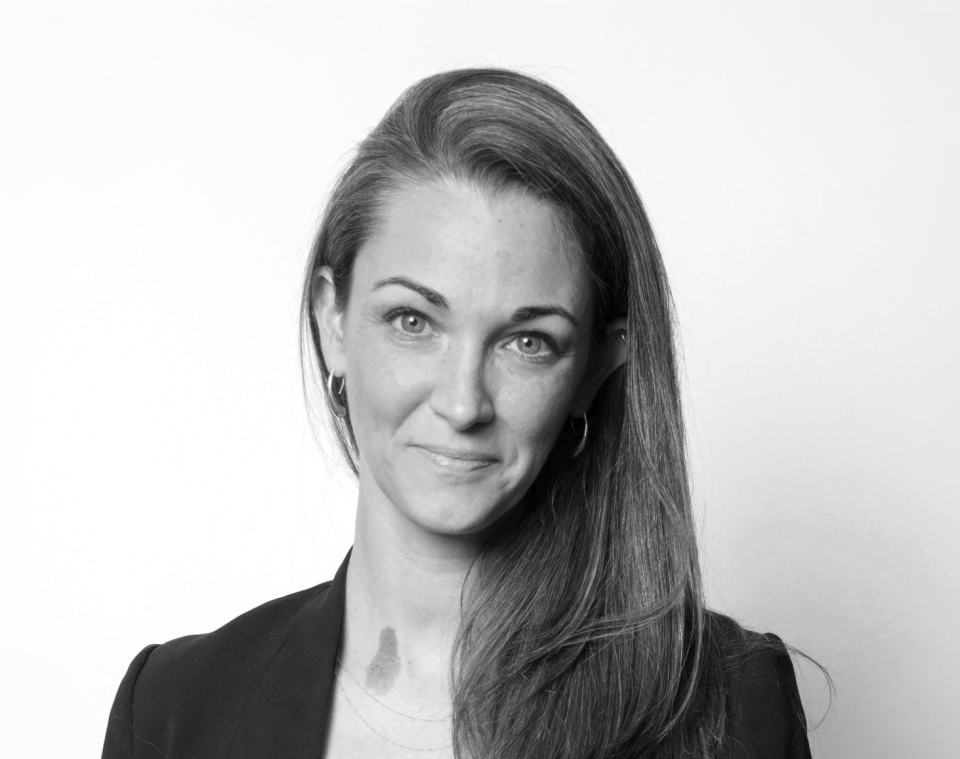
An In Good Company podcast with Erin McCusker, Chief Impact Officer at LIXIL, and leader at SATO
Can business solve global challenges?
What if sustainability isn't a support function, but one of the most important drivers of long-term business success? This week's highlights explore exactly that.
"Not only can business make the world a better place, but business has to be involved if we want to make the world a better place. What really differentiates a company now is how they go about their work. What's the culture you're creating? Are your employees engaged? Are they proud to work there? Everybody's got to think about the global impacts of the work we do. But who's doing that differently? Who's doing it with purpose?"
"You can't smell a pit latrine from your desk"
Drawing on her experience across global health, innovation and sanitation, Erin McCusker shares how businesses can play a critical role in tackling global challenges, what it really takes to design for underserved communities, and why long-term commitment is essential to meaningful change.
In this episode, you’ll hear:
- Why business has to be involved in solving global challenges
- Why technology problems are often ecosystem problems
- How patience and persistence shape long-term change
- The transformative impact of community action learning
Watch the full episode here:
Why does business have to be involved in solving global challenges?
Not only can business make the world a better place, but I think business has to be involved if we want to make the world a better place. Right now, some of the bilateral, multilateral relationships are being constrained, but business is constant. At every single level of community, there’s business. There’s commerce, there’s entrepreneurs, services are being provided, goods are being sold. Sanitation is such a great example of this. You have this idea of a basic human need that applies to everyone in the world, and it has to be solved through business. You don't just need products, you need services and ongoing maintenance. Sanitation is such a fundamental aspect of human rights, human needs and dignity… it's a problem you can’t solve unless you’re really taking that business lens to it.
Why can’t impact sit separately from business strategy anymore?
Our global CEO, Kinya Seto, wrote a couple of years ago that the characters for company and society are the same in Japanese. It’s getting harder to disentangle the two because we are working in communities on a day to day basis and they‘re part of our value chain. The shift has happened where corporate social responsibility and philanthropy aren't kept as separate projects. It’s given us a better business case, (for lack of a better word), to say improving the lives of the people in our value chain helps our value chain be stronger. Improving products that we offer to be more sustainable, to be easier to reuse, to have less footprint is not only going to make them more likely to be in demand, but it's going to make them resilient to future stresses. I think there’s this idea of doing the right thing isn’t just about taking the extra money and investing it as philanthropy. It’s really about investing that in long term resilience for the company, longer term relevance and longer term connection in the communities that we work in or work with. And that mindset is going to be found in the companies that remain relevant and remain strong in a period of such volatility.
What do leaders get wrong when designing for underserved communities?
There’s a reliance on thinking we can learn everything we need to know on the internet and Daigo Ishiyama, one of the designers of the Sato Pan - gave a talk where he said you “can’t smell a pit latrine from your desk”. There’s just this inherent, deep need to understand customers and the people that you're designing for better by living their experiences, really understanding the communities that you're trying to reach and the ecosystem around it. Do you understand where the barriers are? How do you actually make sure underserved communities know it's a solution for them, that it will help to solve their problems, and it's something that they can afford and they can prioritise? So, we really try and look at it from the product, the supply, the demand side, and work with the whole ecosystem of actors to get to a solution into the communities that need them the most.
What does it actually take to turn impact ambition into lasting change?
These things do not happen overnight. You need patience and persistence and commitment. You need a leader who can connect it to something more than just a legal requirement, reporting or a committee. Patience really comes in when you’re able to say, we’re going to set a bold goal, but we’re going to ensure that we are sticking with that because it takes longer than you think. The other piece is that it’s got to be relevant to the company. Sometimes we do things that have positive impact, but they’re treated as a project and they don’t scale because they’re not inherently tied to what we do. It makes very little sense to try and do something that doesn't relate to what you do, because it's got to have purpose. It's got to have meaning.
Bonus insight: how should leaders start?
I would say you’ve just got to start somewhere. Pick a small experiment. It could be an hour of your time, it could be an afternoon - start small - think through: what are the strengths that you personally bring or that your team brings, what problems does that solve for people? If you make impact for one person’s life, that’s one person’s life. And there're probably other people who have similar problems. Sometimes we wait for the impact leader, or a project to be started - but think smaller, take those first steps, start to experiment - and understand what can my company do? That’s how SATO started, with a few people, after hours thinking - what if we did this, what if we did that? Late nights designing a mold, doing some first tests - and here we are 12 years later talking about reaching 100 million people.
Listen to the episode on Spotify
Head to Impact's YouTube / Spotify channels to catch up on previous episodes, including…
How to win through storytelling with Andrew Panay, Hollywood producer