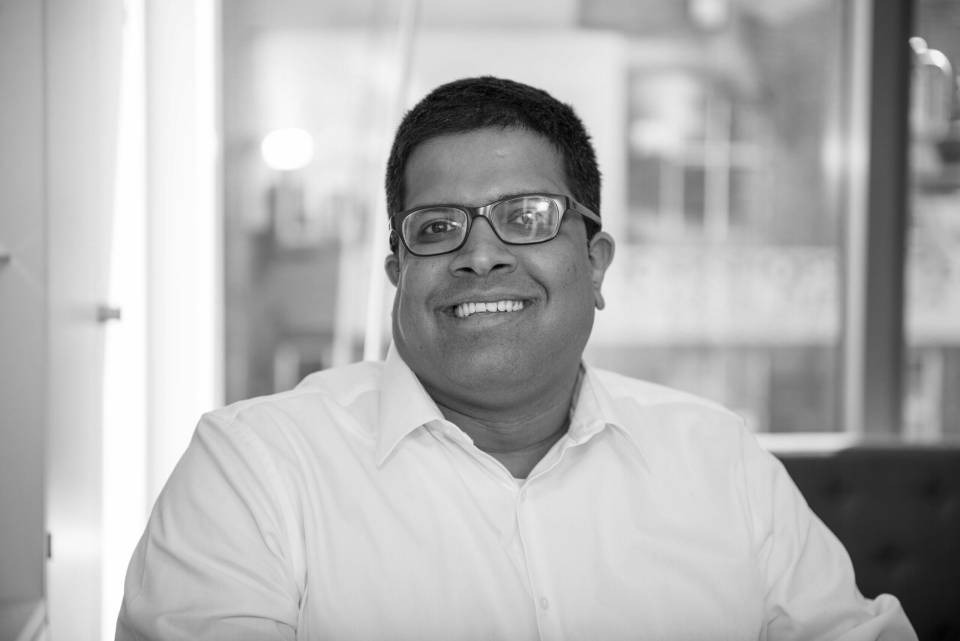
Jay Muthu is Country HR Leader for BT Group in India and the first wheelchair user on BBC Mastermind India!
What's truly essential to a more resilient future?
We might wish for a life as smooth as the Autobahn, but our guest on this In Good Company podcast says a life full of traffic and potholes - like rush hour in Bengaluru - can be more fun and far better at building our resilience.
Latest listen
Jay Muthu is no stranger to the way challenge can strengthen us. At 18-months old he contracted polio, and his experiences as a disabled child growing up in India have shaped his thinking on ambition, resilience, and the importance of role modelling ever since. Jay has spent his career working globally, with a focus on people development, culture, and unlocking the potential in people. Join us to hear why he believes our challenges better equip us to create inclusive change:
- Why resilience is about flexible strength, not mindless resistance
- How our childhoods shape the type of leaders we become
- The advantages, and limits, of strength based leadership
- Surfacing your purpose and aligning it to organisational purpose
Watch the full episode here:
How do you describe resilience?
Resilience for me is about how you use your strength. In a boxing match do you keep going left jab, left jab, left jab or are you more likely to survive if you decide at the right time to duck and use your right? You bounce back from adversity by being flexible. Two things make people resilient. First is a clear North Star - what are you trying to achieve this quarter, these five years, this half-century and how does the form that takes change as you move towards it? Most challenges are just small blips in your journey. The second is recognising you can never be resilient as one individual. It takes a village to bring up a child. It takes a village to make anyone resilient. The support systems you are building up around you defines your resilience.
How does vulnerability connect to resilience?
Vulnerability is the ability to say I am afraid. Resilience is being able to say I’m afraid, but I have the flexibility to work around this. In the corporate world we have stereotyped leaders as those who will never shed a tear, never have a moment, who will never take a pause - because leaders are supposed to go get it done. But if you look at some of the most successful organisations in the world and look back at their story you will see that vulnerability played a key role in their success. If you are a people leader - please be vulnerable, it will make you stronger - more resilience will only come when you accept you are vulnerable. For success in the long-run vulnerability and resilience both need to be there, and sometimes organisations need to help people connect to that part of their psyche, particularly when it’s connected to tough experiences from growing up.
How can leaders build their own resilience, and create the conditions for their people to do the same?
First, create a clear and evolving purpose: why does this team exist? What is it we need to achieve? That can evolve with the business, plans and markets, but continuously revisiting your purpose is very important. Secondly, when people are in your team, treat them with respect, give them that space, create that safe environment where people can experiment and make mistakes, and be there to support each other. Be that village so that people can be resilient and vulnerable. All of this doesn’t cost money; it just takes a moment to step back from the treadmill and say, "what am I going to do different from tomorrow morning?" I think for all leaders, if they want to become resilient and cultivate that in their own teams, they need to build their support system. Build it before you need it; don’t build it when you need it. Take that moment: go on the long walk with your spouse or partner, play with your child, go out for lunch with your friend. And at the workplace, take someone out for coffee and talk about random stuff at a human level. That village is what will protect you.
Bonus insight: how purpose influences leader and people development
There are two things which make good leaders great in my view. One is self‑awareness, and linked to that is purpose. What is my purpose? Am I able to translate my purpose - and the purpose of my team members - into the organisation’s purpose? When you combine resilience with lack of purpose, it doesn’t work. But when you combine resilience with purpose, and when you surface your personal sense of purpose and align it with the organisational purpose it creates magic. Leadership development can help people surface what their purpose is in life and connect that with an understanding of their organisation's purpose.
Listen on Spotify
Listen again
Head to our YouTube / Spotify channels to catch up on previous episodes, including…
064: Why change fails with Impact's Duncan Lydon
Follow Impact on Spotify and subscribe to our channel on YouTube