
Ailie Shackleton is Head of Content Marketing at Impact
"Try and be in one of the groups that comes to the studio."
That's what my podcast co-host Dan Jones told me the day before our quarterly culture day at Impact. No explanation. No agenda. Just a recommendation.
At the time, it seemed an odd thing to say. By the end of the day, I'd realised it was one of the best pieces of advice I'd received all week.
What is an experiential installation?
Last Friday was one of our quarterly culture days at Impact. No two are the same, sometimes they’re focused on our communities (like this one), sometimes they’re about celebrating our people. This time (as Andy Dickson says) “we drank our own champagne” and experienced a series of immersive installations ourselves.
Experiential installations are one of the methods Impact use as a part of our solutions on leadership, culture and change programmes. They might be online spaces or physical rooms, but the intention is the same: to invite people in to an unexpected environment and to immerse them in a short task designed to challenge assumptions, provoke reflection and encourage new ways of thinking.
One of our clients from a global technology organisation described the rooms as experiences that “surprise and delight”, blending reflective spaces with carefully designed "heat moments" that challenge assumptions and spark deeper learning.
Come to the studio. No further instructions.
A team of Impact facilitators had set up nine different experiential installations. And by chance I did visit the studio. I thought I knew what to expect, I work in the studio most days. But this time my usual surroundings had been transformed. I was given a time pressured task and was immediately out of my comfort zone.
My colleague Lou McDonald put it like this “there was nervous tension, surprise, challenge, disbelief, uncertainty and a bit of panic. We went from 'we don't actually have to do this' to 'we've got this, let's do it' in the space of a few minutes. The ‘on air’ sign, the lighting rig, the autocue made it feel even more real. And the emotions afterwards – relief, togetherness and support.”
What did this experience teach me about culture?
There were nine installations in total, and the three I experienced were completely different from those visited by my colleagues. Each one was a full-on sensory challenge and the custom designed rooms made me gasp with disbelief. But the more I moved through the experiences, the more I noticed something else happening. The three people randomly assigned to the same group as me were helping me navigate it. We were making sense of things together. Offering perspective. Cheering each other on. Laughing when things felt awkward.
That's culture.
Because (spoiler alert) these immersive rooms were really just a different way for us to have incredible shared experiences and enter into conversations that make a difference. Expertly guided by my facilitator colleagues (shout out to Scott Rose and Dominic Fitch) we realised we were experiencing many of the things we already say matter to us.
Experiencing what matters
At Impact we have 12 Guiding Principles. We talk about them internally all the time, they define our culture and what’s special about the way we connect with each other – and last week I stopped to think about them in action, because:
- Working together is easy when the answer is obvious. It's harder when you're faced with a tough deadline and are trying to work out what's happening.
- Being real are easy words to say. But they come to life when you feel safe enough to try something you might not be good at.
- And fun and storytelling isn't built in theory. It's built in moments where people help each other navigate uncertainty.
What do I need from my organisational culture?
What an opportunity I was given last week. Time to think about what I need from my organisational culture. And perhaps more importantly – my role in making that happen.
Because the answer isn't fixed.
What I needed in my twenties isn’t what I need in my (ahem) fifties. What I value today may not be what I value in five years' time. We change. Our priorities shift. Our lives evolve. That's why culture isn't something you build once and then preserve forever. It has to evolve too.
The experiential installations challenged us to think about our culture, our impact and our future. But what stayed with me most was something simpler: the strongest cultures create space for people to grow, contribute and belong at different stages of their lives. They encourage curiosity, require courage, strengthen connection and challenge us to think about the impact we're having on one another, our teams, our communities and our organisations every day.
Culture isn’t a poster on a wall. And you’re damn right to think that the best way to explore it isn’t through a survey or a strategy document.
Sometimes it starts with someone saying, "Come to the studio."
And having absolutely no idea what's waiting behind the door.
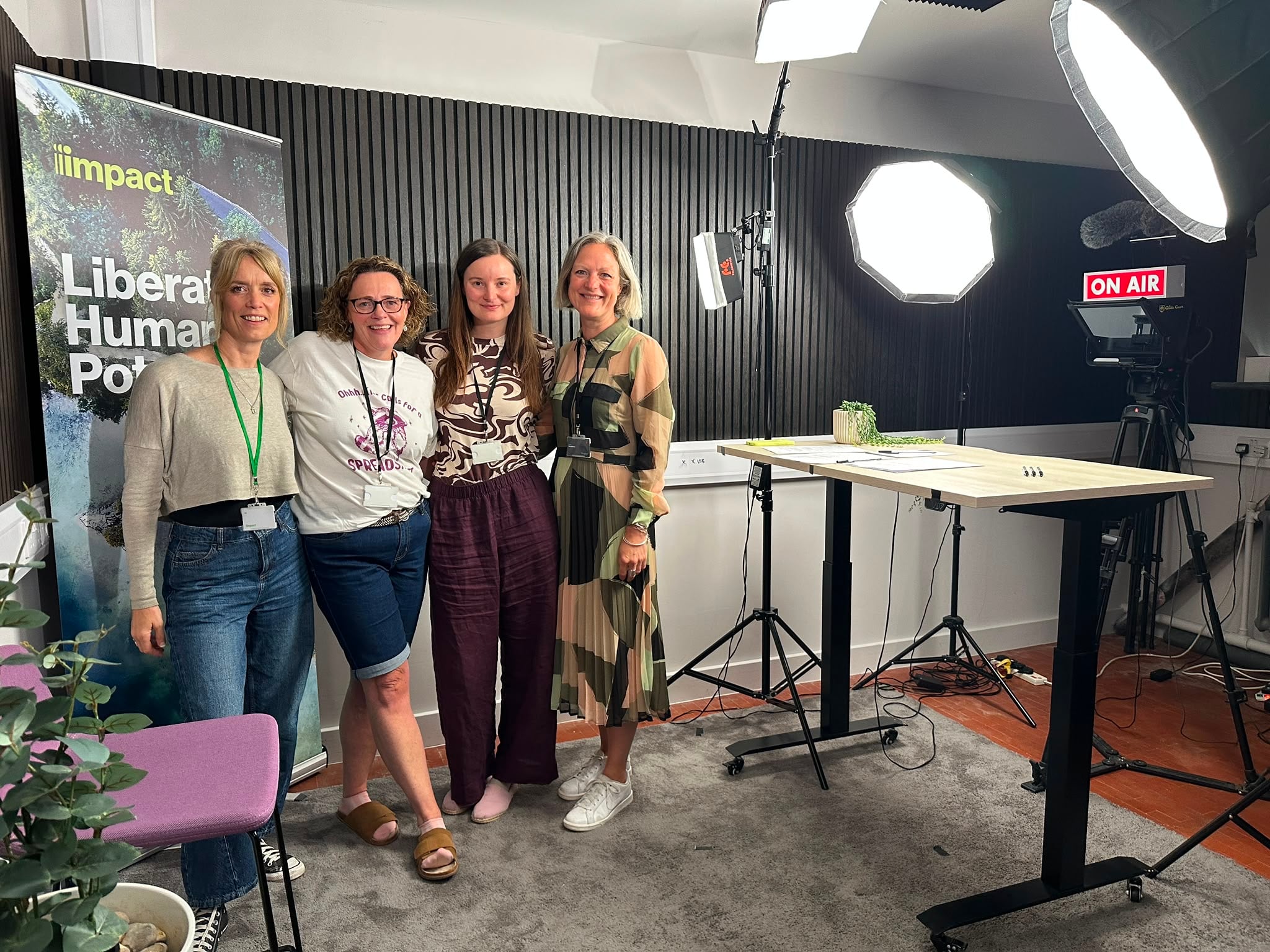
(Photo shows an Impact experiential installation in action / smiling faces at the end!)
If you are interested in learning more about how experiential installations could help your organisation have meaningful discussions about culture, leadership or change then get in touch.