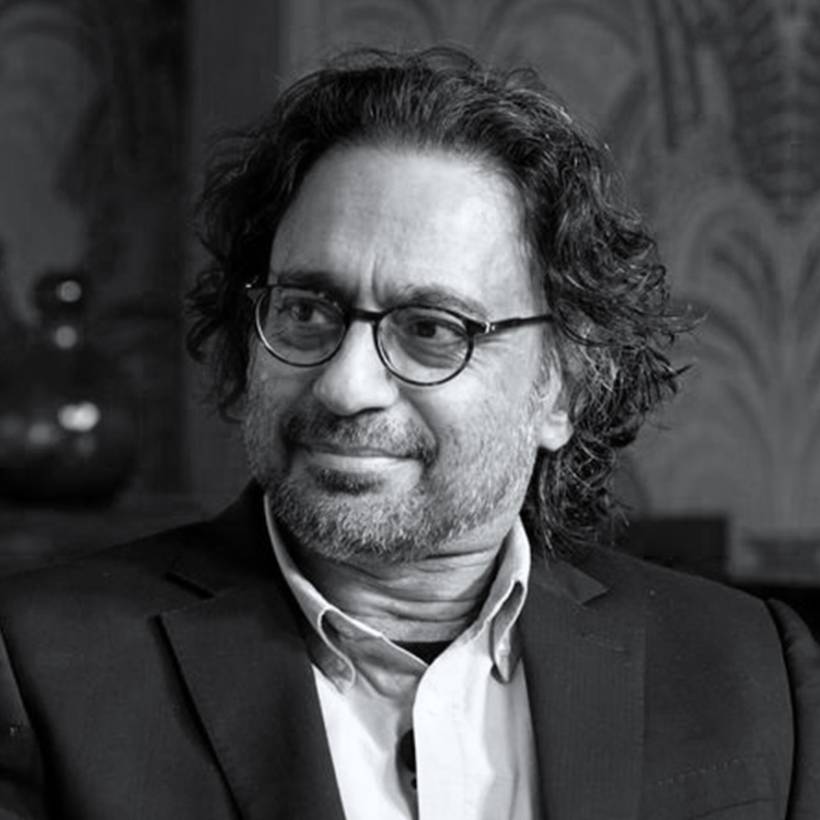
Professor Sudhanshu Palsule is an award-winning educator at Duke and Cambridge, an author and a prominent thinker in the field of transformational leadership
Why we just can't blame complexity anymore
Is the word "complexity" being used as a comfortable excuse, meaning leaders have something to blame - rather than knowing how to lead through it? This podcast is essential listening for followers of cutting edge insights on transformational leadership and change. We get to the heart of what's different about complex change, why leaders get stuck in default modes, why the present moment is a critical jointure for learning and engagement, and finish with a powerful reminder of what we often let stifle our curiosity.
Latest listen
Professor Sudhanshu Palsule is regarded as one of the leading thinkers on complexity and transformative leadership. He’s an educator at Duke, a Senior Associate at the Møller Institute at Cambridge, and he works with global organisations - including the United Nations - to help leaders navigate change in deeply human ways. Empathy, purpose, caring, are at the heart of this weeks conversation - not just as the things that make us human, but as powerful strategic drivers for organisations managing the switch from linear to exponential change.
In the course of their rich discussion Sudhanshu and Dan also highlight:
- How knowledge became another commodity and what the currency of leadership is now
- A corrective for sloppy thinking about complexity
- Healing the anxieties at the core of leadership
- How mastering AI could involve a return to our roots in nature
- What frameworks like VUCA and BANI can miss about change
What's different about the change we've faced since the pandemic and now going into AI?
This change is not the change that we've been used to. This change is essentially exponential. And exponential change requires a fundamentally different approach than linear change. In order to understand exponential change, you've got to figure out a new way of approaching the problem, a new way of thinking. We've got to understand interdependencies, interconnections, we've got to figure out ways by which things interact with each other. And that's an entirely different ball game to what we've been used to. Whether you call it VUCA or BANI the thing we miss out on is we don't understand the kind of change that is going on now by conflating it with change in the past. We are missing the target.
Why do leaders get stuck doing what doesn't work?
A lot aren't aware how stuck they are in a pattern of behaviour. Unconsciously, when you are in that situation, the trigger just activates the same behavioural thinking reaction. There is simply no pause between stimulus and reaction. The difficult thing is how do we help our leaders actually take a pause and step back. Our tendency is to step in. You have to step back first before you step in. And that stepping back is arguably the most difficult thing that we can practice. That's the beginning of the journey. So, the question that I normally ask a leader is, what are the conversations that need to be had that you're not having and what is what is stopping you from that?
Why does engagement and experiential learning matter now?
What worries me is that while the problems that we are trying to solve in the world and in our organisations are becoming increasingly more complex, our attention spans are diminishing rapidly. It's a perfect storm. We have to make a lot more effort to to engage people at a time like this. We must have conversations around purpose. We must have conversations about what really matters to people. We must show a lot more care about things than we've done before. We cannot just leave it to chance that if we give people the right environment, they'll feel engaged. Now, I think we need to make a lot more effort.
Learning has got to go beyond the consumption of information. I've got a wacky theory about this, which is learning sticks only when we embody it, when it enters us and makes home in our bodies. If I want learning that sticks, I want that person to be able to embody that learning. That person's got to feel it inside as a living thing, which means it's got to be experience. There's got to be a component of feeling and emotion in that learning. It cannot just be dry information that I pick up. And it's got to create meaning for us. This is the frontier for the 21st century. How do we generate meaning through the learning that we get our people to do and that we do ourselves?
What's the secret to life-long curiosity and maintaining a beginner's mindset?
When I come to a situation saying "I know", basically what I'm saying is that I know things from the past and that's all I'm going to apply to the present and the future. When you're comfortable entering the space saying I don't know, what follows is curiosity: let's find, let's look, let's listen. These qualities are so important when you want to lead through complexity.
Here’s the funny thing about curiosity. When we become adults, curiosity becomes expensive for the human brain, Curiosity requires energy, which children have in abundance because they're not shackled by beliefs and heuristics and notions of right and wrong. They are not bound by the sense of self-importance and job titles and all the layers we cover ourselves with. There's no room for curiosity, because so much of that energy is being expended in keeping an identity going that you've created for yourself. So what does the human brain do? It says, I need to conserve energy. So I'm going to just say goodbye to curiosity, and I'll just continue doing the same old thing that I was doing before. At least I'm conserving energy.
Listen to the episode on Spotify
Head to Impact's YouTube / Spotify channels to catch up on previous episodes, including…
What award judges really look for with Jackie Barefield, Head of Capability Development at BAT